
Adult Dependent Relative Visa UK 2026: Why Applications Fail & How to Build Strong Evidence
 Gabriella Bettiga
on
Gabriella Bettiga
on
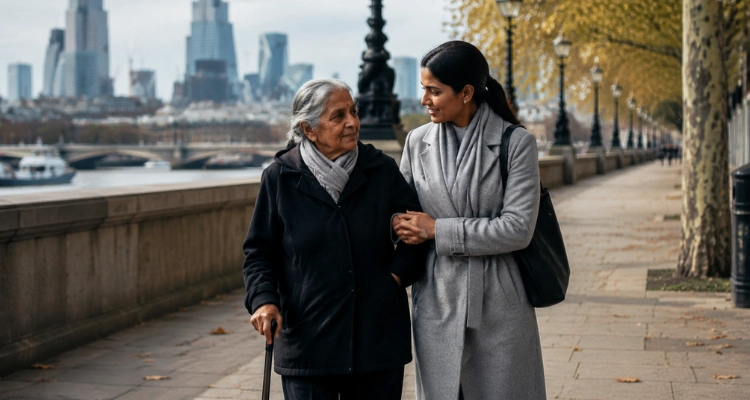
Trying to bring your elderly parent or dependent relative to live with you in the UK can be one of the most emotional and stressful parts of the immigration process.
Many families simply want to care for a loved one who is ageing, seriously ill, or no longer able to live independently.
However, the Adult Dependent Relative Visa, often called the ADR Visa, remains one of the most difficult UK family visa routes to qualify for.
A large number of applications are refused every year because the Home Office applies extremely strict eligibility and evidence requirements. Even cases involving elderly parents or relatives with serious medical conditions can fail if the supporting documents do not fully meet the legal threshold.
One of the biggest misunderstandings is that emotional dependency or a close family relationship alone is enough to secure approval.
In reality, the Home Office expects applicants to prove that the relative requires long-term personal care and that suitable care is either unavailable or unaffordable in their home country.
If you are considering applying for an Adult Dependent Relative Visa in 2026, understanding why applications commonly fail can help you prepare much stronger evidence from the beginning.
The team at MGBe Legal supports families through this difficult and highly evidence-driven route, and this guide reflects the practical issues we see come up most often during ADR consultations.
In this guide, you will learn about the ADR visa requirements, the most common refusal reasons, the type of evidence the Home Office expects, and how to build a stronger application for your dependent relative.
Key Takeaways
- The Adult Dependent Relative Visa is one of the strictest UK family visa routes, and most refusals come from evidence gaps rather than weak family bonds.
- The Home Office requires proof that the applicant needs long-term personal care due to age, illness, or disability, and cannot reasonably receive that care in their home country.
- Emotional dependency or financial support alone is not enough. The decision focuses on practical day-to-day care needs.
- Medical evidence must go beyond a diagnosis and explain how the condition affects ordinary daily activities.
- Sponsors must show they can support and accommodate the applicant in the UK without relying on public funds.
- A well-prepared application combines consistent medical, financial, accommodation, and personal statement evidence telling the same story.
- Common refusal reasons include weak medical reports, missing care assessments, inconsistent financial documents, and failure to address local care options abroad.
What Is the Adult Dependent Relative Visa?
In simple terms, the ADR visa allows certain dependent adult relatives to join a family member in the UK permanently if they require long-term personal care that cannot reasonably be obtained where they currently live.
This visa falls under Appendix FM of the UK Immigration Rules, which you can review on the GOV.UK Immigration Rules Appendix FM.
The threshold for approval is intentionally high. The Home Office expects applicants to demonstrate not only that care is needed, but also why local care solutions are unsuitable or unavailable.
Who Can Apply for an Adult Dependent Relative Visa?
The ADR route is generally intended for close adult relatives who genuinely depend on family support because of serious care needs.
Eligible relatives may include:
- Parents
- Grandparents
- Adult sons or daughters
- Brothers or sisters
However, simply being related to someone in the UK does not automatically create eligibility. The applicant must show evidence of long-term dependency and personal care requirements.
Who Can Sponsor an ADR Applicant?
Not everyone living in the UK can sponsor an ADR application.
Typically, the sponsor must be:
- A British citizen
- A person settled in the UK
- Someone with refugee status
- A person with humanitarian protection
The sponsor is also expected to show they can financially support and accommodate the applicant without relying on public funds.
Adult Dependent Relative Visa Requirements in 2026
The Adult Dependent Relative Visa has some of the strictest requirements in the UK immigration system.
Many families assume that proving a medical condition or family relationship will be enough, but the Home Office applies a much higher threshold than most people expect.
To succeed, your application must show that the relative genuinely requires long-term personal care and cannot reasonably receive that care in their home country, even with financial support from family members in the UK.
Long-Term Care Requirement
The foundation of every ADR application is proving that the applicant needs long-term personal care because of age, illness, disability, or a medical condition.
This usually involves showing that the person struggles with essential daily activities such as:
- Washing and bathing
- Dressing
- Cooking
- Taking medication
- Mobility
- Personal hygiene
The Home Office expects detailed medical evidence explaining not only the diagnosis but also how the condition affects daily life.
For example, a brief doctor’s note stating that someone is elderly or unwell is unlikely to be enough.
Decision-makers typically look for comprehensive medical reports that explain:
- The nature of the condition
- Long-term prognosis
- Level of dependency
- Specific care requirements
- Why independent living is no longer possible
Lack of Adequate Care in Home Country
This is often the most difficult part of an ADR application.
Even if the applicant clearly needs care, the Home Office may still refuse the visa if they believe suitable care could reasonably be arranged in the applicant’s country of residence.
This means the application must explain why care is unavailable, inaccessible, unaffordable, or inadequate abroad.
The Home Office may consider factors such as:
- Availability of professional carers
- Local healthcare systems
- Financial affordability
- Family support networks
- Cultural or practical barriers
- Accessibility of medical treatment
Many applications fail because families focus heavily on emotional reasons while providing very limited evidence about why local care options are unsuitable.
Financial Sponsorship Requirements
The UK sponsor must show they can support the applicant financially without claiming public funds.
Unlike some family visa categories, there is no fixed minimum income threshold. However, the sponsor must still demonstrate they can cover:
- Living costs
- Accommodation
- Care expenses
- Medical support if necessary
Strong financial evidence often includes payslips, bank statements, tax records, and employment documentation.
Relationship Requirements
The Home Office also requires proof of the genuine family relationship between the applicant and sponsor.
Depending on the case, this may include:
| Requirement | Evidence Needed |
|---|---|
| Parent Relationship | Birth Certificates |
| Grandparent Relationship | Family Records Showing Lineage |
| Sibling Relationship | Shared Parental Documents or Birth Certificates |
| Dependency History | Financial Transfer Records, Communication Logs, or Evidence of Ongoing Support |
Documents must usually be officially translated if they are not in English.
Immigration Status of the UK Sponsor
The sponsor must normally be:
- A British citizen
- Settled in the UK
- A refugee
- A person with humanitarian protection
The Home Office will verify the sponsor’s immigration status during the application process.
You can review the official visa requirements on the GOV.UK Adult Dependent Relative Visa page.
Because ADR applications are assessed so strictly, every requirement must be supported with detailed and well-organised evidence rather than assumptions or emotional explanations alone.
Why Adult Dependent Relative Visa Applications Commonly Fail
Many families begin the ADR visa process believing their case is straightforward.
A parent may be elderly, seriously ill, living alone, or struggling with everyday tasks. From a personal perspective, the need for family support can feel obvious.
But the Home Office looks at whether the legal requirements are fully proven through evidence. That is where many applications begin to fall apart.
Insufficient Medical Evidence
This is one of the biggest reasons ADR applications fail.
Families often submit short medical letters confirming that a relative is elderly or has health conditions, assuming that will be enough. In reality, the Home Office usually expects much more detailed evidence.
A strong medical report should explain how the condition affects the person’s daily life in practical terms. Can they dress independently? Are they able to wash safely? Do they forget medication? Can they prepare food or move around without assistance?
Without those details, decision-makers may conclude that the applicant’s condition does not meet the threshold for long-term personal care.
The difference between a generic and a strong, detailed medical report can completely change the outcome of a case.
Failure to Prove Lack of Care in Home Country
This is where many family cases are refused.
You may know that your parent would be safer and better cared for in the UK. You may already be financially supporting them from abroad and speaking to them several times a day. But the Home Office asks a very specific question:
“Can appropriate care reasonably be provided in the applicant’s home country?”
If the answer appears to be yes, even theoretically, the visa may still be refused.
For example, if private carers, nursing facilities, or local relatives are considered available, the Home Office may argue that relocation to the UK is unnecessary. This is true even if those care options are emotionally difficult, culturally unsuitable, or financially unrealistic from the family’s perspective.
That is why evidence about local care limitations becomes so important.
Weak Evidence of Dependency
Another common problem is misunderstanding what “dependency” means under the immigration rules.
Many families are emotionally close. Children may send money home regularly, arrange medical appointments remotely, or speak to elderly parents every day. While this demonstrates family commitment, it does not automatically prove the type of dependency required for an ADR visa.
The Home Office is looking for evidence of serious physical or practical dependency linked to long-term care needs.
This distinction frustrates many families because emotional reliance and genuine concern are real. However, the visa category is focused primarily on care necessity rather than emotional hardship alone.
Incomplete Financial Documentation
Some applications fail even when the medical evidence is strong because the financial documents are poorly prepared.
The sponsor must show they can support the applicant adequately without public funds. Missing payslips, inconsistent bank statements, outdated employment letters, or unclear accommodation evidence can weaken the application significantly.
Sometimes the refusal is not because the sponsor lacks financial stability, but because the documents fail to present the situation clearly.
Poorly Prepared Application Statements
A weak personal statement can quietly damage an otherwise strong application.
Some statements become overly emotional without addressing the actual legal requirements. Others contain vague explanations or inconsistencies that create confusion.
For example, an application may claim no care is available abroad, while medical records or financial documents suggest professional care facilities do exist locally. These contradictions can affect credibility.
A strong statement usually connects the evidence together clearly and explains the full context behind the application in a logical way.
Missing Supporting Documents
Small evidential gaps can create major problems in ADR applications.
Missing translations, incomplete medical records, absent care assessments, or outdated financial documents may all raise concerns during review. Because ADR visas are assessed so strictly, decision-makers often expect every important claim to be supported by documentary evidence.
This is why many families with genuine care concerns still receive refusals.
The Home Office is not simply assessing compassion. It is assessing whether the evidence fully satisfies one of the strictest family visa categories in the UK immigration system.
How to Build Strong Medical Evidence for an ADR Visa
Medical evidence is often the foundation of an Adult Dependent Relative Visa application.
In many cases, the outcome depends less on the existence of a medical condition and more on how clearly the evidence explains the applicant’s daily care needs.
A common mistake families make is assuming that a diagnosis alone proves eligibility. It does not.
Obtain Detailed Medical Reports
Strong medical evidence should go far beyond a brief doctor’s letter.
For example, a report that simply states an applicant has arthritis, dementia, or mobility problems may carry limited weight if it does not explain the practical consequences of those conditions.
A more persuasive medical report usually includes:
- Diagnosis and medical history
- Current symptoms
- Long-term prognosis
- Physical or cognitive limitations
- Daily care requirements
- Risks associated with independent living
The Home Office often expects reports to explain how the condition impacts everyday functioning rather than only naming the illness itself.
Use Independent Care Assessments
Independent care assessments can significantly strengthen an ADR application.
These assessments are usually prepared by healthcare professionals or social care specialists who evaluate how much support the applicant requires on a daily basis.
A professional assessment may help demonstrate:
- Whether the applicant can manage personal hygiene independently
- Mobility limitations
- Supervision needs
- Medication support requirements
- Risks of falls or injury
- Mental health or cognitive concerns
Independent evaluations often carry additional credibility because they provide a more objective picture of the applicant’s situation.
Show Why Daily Tasks Cannot Be Managed Alone
One of the most important parts of the application is explaining how the applicant struggles with ordinary daily activities.
The Home Office may look closely at whether the person can realistically manage:
- Dressing and washing
- Cooking meals
- Taking medication safely
- Moving around the home
- Attending medical appointments
- Managing personal safety
This is where detailed examples matter.
For instance, explaining that an elderly parent has fallen multiple times, forgets medication, or requires assistance using the bathroom creates a far clearer picture than simply saying they are “unwell” or “need support”.
Explain Why Care Is Unavailable or Unaffordable Abroad
Even strong medical evidence may not be enough if the Home Office believes appropriate care could still be arranged overseas.
This means your evidence should also address practical barriers in the applicant’s home country, such as:
- Lack of specialist medical facilities
- Shortage of reliable carers
- Unsafe care conditions
- Financial inability to afford professional care
- Absence of nearby family support
Applications are often stronger when medical reports, care assessments, and supporting statements all tell the same consistent story.
Ultimately, strong medical evidence is not just about proving illness. It is about demonstrating why the applicant cannot reasonably continue living independently without long-term personal care from family in the UK.
Financial and Accommodation Evidence You Should Prepare
A surprising number of Adult Dependent Relative Visa applications fail even when the medical evidence is strong.
Families often spend months gathering hospital reports and care assessments, only to underestimate the financial and accommodation side of the application.
From the Home Office’s perspective, the question is practical as well as compassionate. If your relative is allowed to move to the UK permanently, how will they realistically be supported day to day?
That is why financial documents matter so much.
Sponsor Income and Savings Documents
The sponsor must show they can support the applicant properly without relying on public funds.
There is no strict minimum income threshold under the ADR route, but that does not mean financial evidence is less important.
In fact, weak financial documents can damage an otherwise well-prepared case.
For example, if bank statements show unstable income patterns, unexplained transactions, or very low savings, the Home Office may question whether long-term support is genuinely sustainable. The same problem can happen when payslips, tax records, or employment letters do not match each other.
A well-prepared application usually creates a clear financial picture rather than simply attaching large amounts of paperwork.
Common documents often include:
- Payslips
- Bank statements
- Tax returns
- Employment letters
- Savings records
- Self-employment accounts where relevant
What matters most is consistency and credibility.
Accommodation Evidence
Accommodation evidence becomes more important than many families expect.
The Home Office does not simply want to know that the applicant has somewhere to stay temporarily. It wants to understand the long-term living arrangements and whether the accommodation is genuinely suitable for someone who may have significant care needs.
For example, if the relative has mobility problems, questions may arise about stairs, access to bathrooms, or available space within the property.
Applications are often stronger when accommodation evidence feels practical and realistic rather than rushed.
Depending on the situation, families may include:
- Property ownership documents
- Tenancy agreements
- Mortgage statements
- Council tax records
- Property inspection reports
Some applicants also provide photographs of the property or written explanations about how care will be managed inside the home.
Demonstrate Ability to Support the Applicant
This part of the application is not only about income. It is about showing stability.
The Home Office wants reassurance that the sponsor can realistically manage the additional financial responsibility of caring for a dependent relative in the UK over the long term.
That may include covering:
- Daily living costs
- Food and household expenses
- Care support
- Medical needs
- Utility costs
Applications often become more persuasive when the sponsor explains how support has already been provided historically. For instance, evidence showing regular financial transfers to the relative abroad can help demonstrate an existing pattern of responsibility and dependency.
Additional Supporting Evidence
Sometimes, additional documents strengthen the overall application more than families realise.
Utility bills, care expense receipts, employment confirmations, or written sponsor statements can all help reinforce the wider narrative behind the case. These details may appear minor individually, but together they help create a more complete and believable picture.
In ADR cases, strong evidence is rarely about one perfect document.
It is usually the combination of medical, financial, accommodation, and personal evidence all supporting the same consistent story.
How to Write a Strong Personal Statement for an ADR Visa Application
Families often spend time collecting medical reports, bank statements, and care records for an ADR visa application, only to rush through the personal statement at the very end.
That is a mistake.
The statement is not just a formality. It is the part of the application that explains the reality behind the paperwork.
A doctor’s report may confirm that your parent has mobility issues. Financial records may show you have been supporting them for years. But neither document fully explains what daily life actually looks like for the person involved. The personal statement fills that gap.
Explain the Applicant’s Care Needs Clearly
This is where detail matters.
Saying an elderly parent is “unwell” or “needs help” usually does not tell the Home Office very much. Decision-makers are trying to understand how the condition affects ordinary life on a practical level.
Can they safely use the bathroom alone? Have there been falls inside the home? Do they forget medication? Are they able to cook, clean, or leave the property independently?
Specific examples often make the situation far clearer than emotional language alone.
Families sometimes worry that explaining these difficulties feels uncomfortable or invasive, especially when discussing a parent’s loss of independence.
But in ADR cases, practical detail is often what helps decision-makers properly understand the seriousness of the care needs.
Describe Family Circumstances Honestly
If there are no relatives nearby to help, explain why. If other family members are elderly themselves, living abroad, or financially unable to provide care, that context matters. The Home Office wants to understand why relocation to the UK has become necessary rather than simply preferable.
At the same time, it is important not to exaggerate.
If parts of the statement conflict with medical records or financial evidence, even unintentionally, credibility can quickly become an issue.
A calm, honest explanation is usually far more persuasive than dramatic wording.
Address Previous Care Attempts
This section is often overlooked, but it can become one of the most important parts of the statement.
The Home Office will usually want to know what efforts have already been made to arrange care in the applicant’s home country. If private carers were hired unsuccessfully, if care homes were unsuitable, or if local support repeatedly broke down, those details help explain why the current situation is no longer workable.
Without that explanation, a caseworker may simply assume that reasonable alternatives still exist overseas.
Sometimes, families focus so heavily on proving the medical condition that they forget to explain the history of failed care arrangements that led to the application in the first place.
Keep Information Consistent with Supporting Documents
A strong personal statement should feel connected to the rest of the evidence rather than separate from it.
For example, if medical reports describe severe mobility problems, the statement should reflect that reality naturally. If financial records show long-term support being sent abroad, the statement can explain how that support has been used over time.
The strongest ADR applications usually feel coherent from beginning to end. The medical evidence, financial documents, care history, and personal statement all point towards the same conclusion without contradictions or gaps.
That consistency is often what makes an application credible and carefully prepared rather than rushed or incomplete.
Conclusion
The Adult Dependent Relative Visa remains one of the most challenging family visa routes in the UK immigration system.
Many families approach the process believing that genuine care needs and close family relationships will naturally lead to approval, only to discover how strict the evidential requirements really are.
In reality, successful ADR applications usually depend on how clearly the evidence supports every part of the legal test.
Medical reports must explain practical day-to-day care needs in detail. Financial documents need to demonstrate long-term stability and support. Evidence about the lack of suitable care abroad often becomes just as important as the medical condition itself.
Even personal statements can influence how credible and consistent the overall application appears.
This is why careful preparation matters so much.
At MGBe Legal, families can receive professional guidance tailored to complex UK immigration matters, including Adult Dependent Relative Visa applications. Our team can help assess eligibility, identify evidential weaknesses, prepare supporting documents, and build stronger applications designed around the Home Office requirements.
Contact MGBe Legal today for expert immigration guidance and a personalised ADR visa consultation.
Frequently Asked Questions (FAQs)
Gabriella Bettiga
Director of MGBe Legal
I founded MGBe Legal, a firm regulated by the Immigration Advice Authority (IAA), with the mission to provide high-quality, simplified, and accessible legal services to clients from all walks of life.